
An Comprehensive Guide to Corporate Logo Signage
In the modern competitive business landscape, a company’s corporate logo is far more than just a graphic asset—it is the visual embodiment of its brand identity, values, and market reputation. When translated into the physical world, a corporate logo sign serves as a silent ambassador, welcoming clients, guiding visitors, and projecting professionalism around the clock. From towering outdoor monoliths to sleek reception displays, logo signage is a critical investment in architectural branding. Understanding the intricacies of sign materials, categories, and practical applications allows businesses to craft a cohesive and memorable physical presence.
The Anatomy of Choice: Common Materials for Corporate Logo Signs
Selecting the right material is the first and most crucial step in sign manufacturing. The chosen medium dictates the sign’s durability, visual weight, and alignment with the brand’s aesthetic.
1. Acrylic
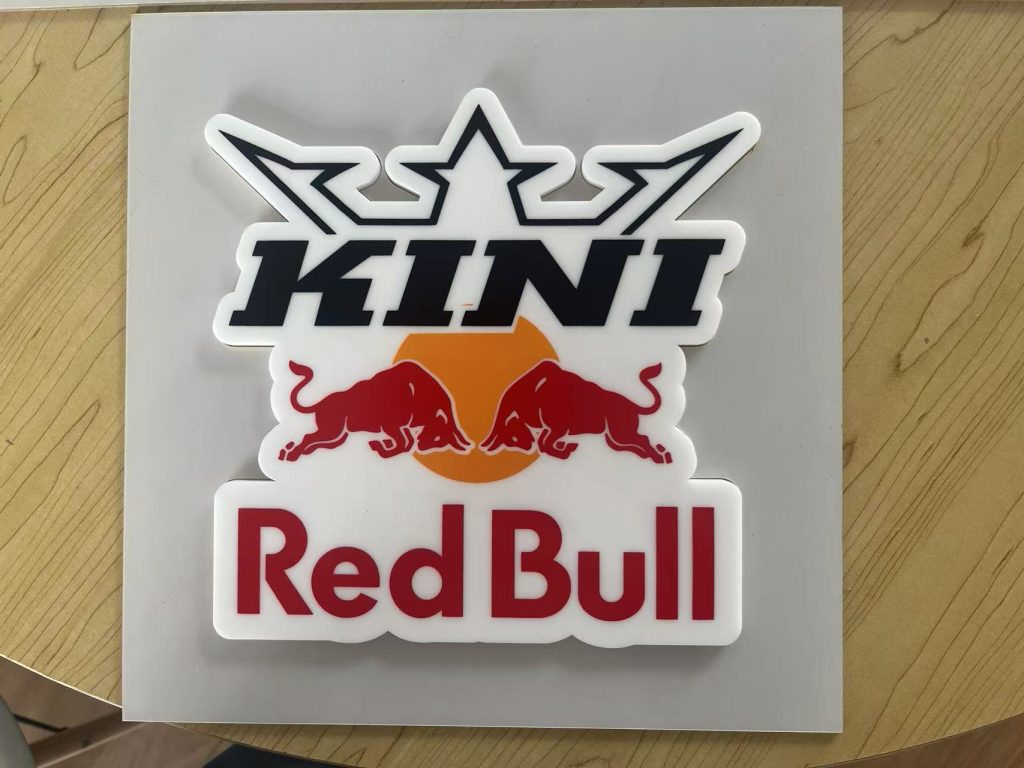
Acrylic is a perennial favorite for indoor corporate branding, particularly for lobby and reception areas. It offers a clean, glass-like transparency without the extreme weight and fragility of actual glass. Acrylic panels can be laser-cut into precise dimensional letters, painted on the reverse side for a glossy finish, or layered to create three-dimensional depth. It adapts exceptionally well to modern, minimalist corporate environments.
2. Metals (Stainless Steel, Aluminum, and Brass)
Metal signage exudes permanence, authority, and high-end sophistication. Brushed or mirror-polished stainless steel is heavily favored for corporate headquarters and financial institutions due to its corrosion resistance and timeless sheen. Aluminum, known for its lightweight nature and flexibility, is frequently utilized for both indoor wall logos and outdoor architectural signs. It can be powder-coated in a vast array of custom Pantone colors to precisely match brand guidelines. Brass and bronze, on the other hand, offer a classic, prestigious warmth often chosen by law firms, luxury brands, and historical institutions.
3. Wood and High-Density Urethane (HDU)
For companies wishing to project organic warmth, craftsmanship, or heritage, wood remains an exceptional choice. While traditional woods like mahogany, oak, or teak require diligent sealing for outdoor longevity, modern sign-makers also utilize High-Density Urethane (HDU). HDU mimics the rich texture of wood or carved stone while offering superior resistance to moisture, warping, and rotting, making it ideal for rustic corporate parks and boutique firms.
4. Glass and Composite Panels
Ultra-clear or frosted glass brings unmatched elegance to executive offices and conference room identifiers. Etched or back-painted glass creates sophisticated plays on light and shadow. Meanwhile, Aluminum Composite Panels (such as Dibond) combine thin aluminum sheets with a solid polyethylene core, delivering a lightweight, rigid, and weather-resistant substrate widely used for flat-mounted exterior logo displays.
Categorizing Corporate Logo Signage
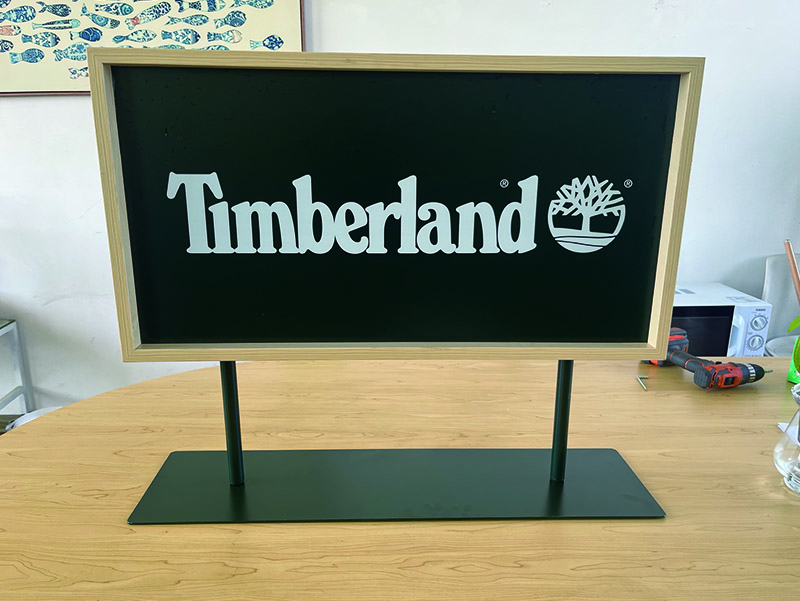
Corporate signage spans various categories, each serving a unique structural and communication purpose within a comprehensive branding strategy.
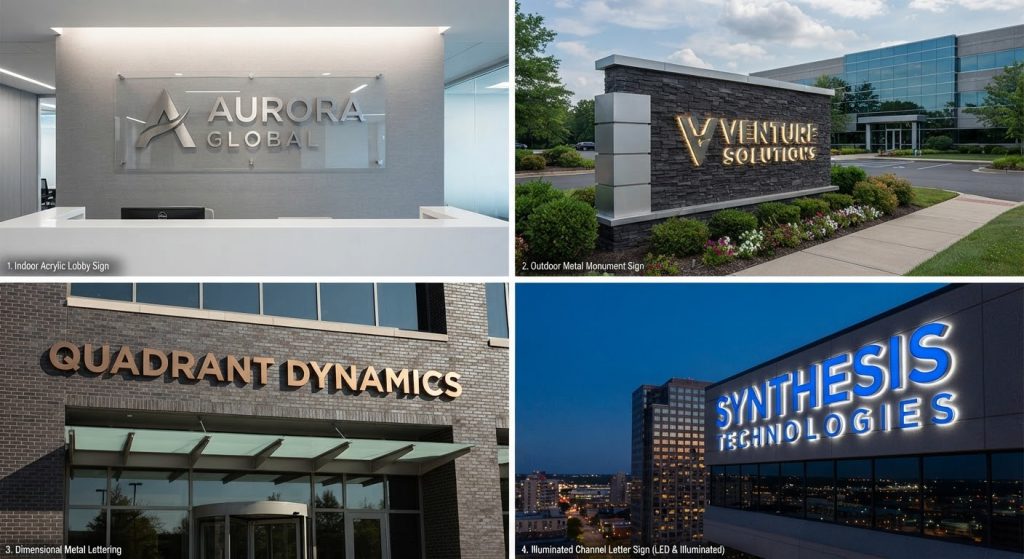
Indoor Reception and Lobby Signs: Positioned directly behind the front desk, these signs form the primary impression for visiting clients and partners. They often blend acrylic backing panels with metallic dimensional lettering, creating a striking focal point that anchors the interior design.
Outdoor Monument and Pylon Signs: These are large, freestanding ground structures placed at the entrance of corporate campuses, business parks, or industrial facilities. Built to withstand harsh weather conditions, they typically incorporate heavy-duty metals, stone masonry, or durable HDU to display corporate names and logos to vehicular and pedestrian traffic.
Dimensional Lettering: Instead of a traditional flat board, individual letters and logo symbols are cut out and mounted directly onto a wall—either flush or using stand-off spacers. This technique casts subtle natural shadows, adding architectural depth and dynamism to plain office walls.
Illuminated Signs: To ensure 24/7 brand visibility, logos are integrated with lighting systems. Options include face-lit channel letters that emit direct light, halo-lit (backlit) signs that create a sophisticated glow ring around each letter, and energy-efficient LED lightboxes.
Strategic Applications and Business Value
The strategic placement of logo signage transforms a generic physical space into an immersive brand experience. In corporate headquarters, directional and departmental signs bearing the company logo ensure seamless navigation while subtly reinforcing brand identity across every corridor. At trade shows and exhibitions, lightweight acrylic or foam-backed logo displays offer portable, high-impact visibility that attracts prospective clients amidst crowded convention halls.
Furthermore, high-end exterior signage serves as an anchor of trust and stability. A well-maintained, professionally illuminated metal logo on a building facade communicates corporate success and reliability to the public market. When interior and exterior logo signs share consistent typography, color palettes, and material choices, they establish an integrated visual ecosystem. This consistency reassures stakeholders of the company’s meticulous attention to detail, proving that effective logo signage is not merely an expense, but a foundational pillar of corporate architecture and long-term brand equity.